Forum

2025 Forum Banner

2025 Library Publishing Forum

Keynote Speakers
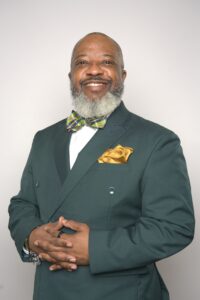
Jerome Offord, Jr.

DEI Is NOT Dead: Reigniting the Flame for Equity and Inclusion in a Changing World

As organizations navigate cultural shifts, political pressures, and economic uncertainty, one critical truth remains: diversity, equity, and inclusion (DEI) are not passing trends; they are essential pillars for sustainable leadership, innovation, and community impact. Amid debates and skepticism surrounding the future of DEI initiatives, this plenary session brings together thought leaders, change agents, and innovators to reaffirm and reimagine the role of DEI in today’s evolving landscape. The session will challenge the narrative that DEI has lost relevance, offering bold insights and data-driven strategies proving its continued importance across sectors. Through compelling storytelling, real-world examples, and interactive dialogue, this session will inspire attendees to move beyond performative practices and reignite authentic, purpose-driven engagement. This is not just a conversation; it’s a call to action. DEI is not dead. It’s being reborn. Be part of the movement.

Key Takeaways:

  • Understand the evolving landscape of DEI in a complex social and political climate.
  • Explore innovative and sustainable DEI strategies for long-term success.
  • Gain tools to respond to DEI fatigue and pushback with clarity, courage, and credibility.

About the Speaker

Jerome Offord, Jr. is the Associate University Librarian (AUL) and Chief Diversity Officer for Harvard Library. Expanding upon the library’s strong record of diversity initiatives, the AUL and Chief Diversity Officer collaborates extensively to develop strategies for organizational change through the library’s workforce, services, collections, and spaces. Before joining Harvard, Jerome served as the Vice President for Business and Administration at DeEtta Jones and Associates. Jerome has held senior cabinet positions at Lincoln University of Missouri, a Historically Black College and University (HBCU), over a span of eight years. Initially hired as Dean of Library Services and Archives, he was soon asked to serve as Interim Provost and Interim Chief Information Officer. He was subsequently appointed Chief of Staff to the President, and then Dean of Administration and Student Affairs. Jerome’s other professional experiences include serving as Diversity Officer and Corporate Inclusion Manager at OCLC Online Computer Library Center; Director of Diversity Initiatives at the Association of Research Libraries; Director of Finance and Development at Us Helping Us, People Into Living; and in student affairs roles at Colorado State University, George Washington University, and American University. Jerome’s educational credentials include a Ph.D. in Library and Information Science, with an emphasis in Managerial Leadership, from Simmons University in Boston; master’s degrees in Library and Information Science from the Catholic University of America and in Student Affairs in Higher Education from Colorado State University; an Executive MBA from Washington University in St. Louis; and a Bachelor of Science in Agriculture from Lincoln University.


Tim Ribaric and Cecile Farnum

Harvesting Library Labour in an AI World: The Grim Reaping of Library Work(ers) and What We Can Do About It

“You must give to get, You must sow the seed, before you can reap the harvest.” ~ Scott Reed

The growth of GenAI, LLMs, and chatbots threaten many established ways of performing academic work, and is already resulting in labour concerns for library workers.  This keynote considers the impact of AI on scholarly publishing work in academic libraries.

All aspects of the  scholarly publishing life cycle (Submit, Review, Decide, Edit and Preserve) have the potential for a deep impact from AI, and are therefore relevant for the library community to consider. Scholarly publishing work is also deeply intertwined with the open access movement, where processes and outputs are often done ‘out in the open’, and are therefore ripe for harvesting by A.I. for reuse. What are the potential consequences of this brand of cognitive offloading in the scholarly publishing process? And what are the labour implications for library workers, authors and publishers, when A.I. tools begin to do this work?

In this keynote, librarians Tim Ribaric and Cecile Farnum will consider the role libraries may play in both augmenting and striving against AI, using a critical lens that is skeptical of the difference between what the promise of AI is, compared to the reality of what it will bring.

About the Speakers
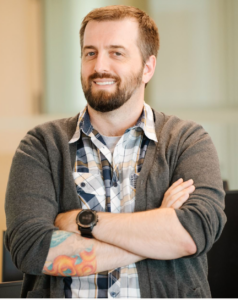
Tim Ribaric is the Scholarly Publishing and Platforms Librarian at Brock University. He is a Librarian IV, and a PhD Candidate. He has published on technology instruction in libraries, Marxism, and is currently teaching 3 Library Juice Academy classes. He has served in various roles on his union executive and was the chair of the Canadian Association of University Teachers Librarians’ and Archivists’ committee.
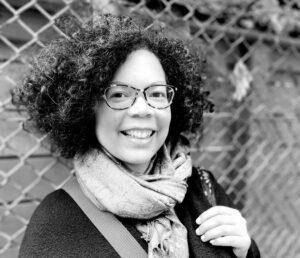

Cecile Farnum  (MA, MISt) is a liaison librarian at Toronto Metropolitan University Libraries. In this role, she supports specific academic programs, providing instruction, reference and research support to students and faculty.

Cecile actively participates in labour spaces,  having participated in several rounds of collective bargaining through her faculty association, as well as work on other  faculty association committees. Cecile also recently served on the CAUT Librarians’ and Archivists’ Committee, and the steering committee to organize OCUFA’s 2024 Bargaining Stronger Together Collective Bargaining Conference.



Sponsorship Opportunities

Sponsors of the Library Publishing Forum demonstrate their commitment to the emerging community of library publishers, including their many affiliates and partners. By becoming a sponsor, you will reach a highly influential, international audience of potential new partners and clients. S

The 2026 Library Publishing Forum will be an in-person event held June 17–18 at the University of Washington in Seattle, Washington. 

Sponsorship dollars help to fund the costs associated with hosting the conference. We are pleased to offer several sponsorship levels and new benefits for the 2026 Forum.

This year, we are also offering an add-on opportunity for the AUPresses joint summit on June 16.

See below for the full descriptions. 

Email contact@librarypublishing.org to get started or with any questions.

Forum Supporter

Amount: $500 and above

Benefits:

  • A logo/link on the Forum website and acknowledgement as a Forum Supporter
  • Access to the Library Publishing Forum Discord server, including dedicated sponsor channel
  • Slide featuring logo and short blurb (see example) to be included in a slideshow that will rotate on presentation screen in main room before the keynotes and presentations (This year we will also be including a QR code to your website)

Forum Sponsor

Amount: $1,000 and above

Benefits:

  • All $500 benefits
  • Exhibit space (a limited number of tables will be available, allocated in order of requests)
  • One complimentary Forum registration
  • Option to submit a 1-page PDF for inclusion in online program PDF (send to contact@librarypublishing.org by May 29, 2026)

Forum Sustainer 

Amount: $1,500 and above

Benefits:

  • All $1,000 benefits
  • Additional complimentary Forum registration
  • Option to showcase your product/service:choose your format(s):
    • A blog post on LPC’s website (we recommend a post that highlights pain points that library publishers may go through that you can solve/have solved for others: we’ll help by providing an outline)
    • A 30-second mp4 which can be included in the blog post and on the Forum Discord server for pre-viewing before the Forum
  • Option to participate in one-on-one personal consultations with library publishers, both in person at the Forum and virtually through the remote engagement program

Coffee Break Sponsor

Amount: $3,000 and above

Limit: 4

Benefits:

  • All $1,500 benefits
  • Room at Forum hotel for one person for two nights (June 16 and June 17). The deadline for signing up for this benefit is March 13, 2026.
  • Acknowledgment as the sponsor of one of the four coffee breaks during the in-person Forum, including signage

Reception Sponsor

Amount: $5,000

Limit: 1

Benefits:

  • All $1,500 benefits
  • Room at Forum hotel for one person for two nights (June 16 and June 17). The deadline for signing up for this benefit is March 13, 2026.
  • Acknowledgment as the sponsor of the in-person Forum reception, including signage

Summit Add-on

Background: In cooperation with the University-Based Publishing Futures (UBPF) community, the Library Publishing Coalition (LPC) and Association of University Presses (AUPresses) are hosting a joint summit on June 16 between the AUPresses Annual Meeting and the Library Publishing Forum. This event is titled “Responding to Universities in Crisis: A Summit for University-Based Publishing.” We expect the summit to draw attendees from both conferences, as well as single-day participants.  

Amount: $100

Benefits:

  • Recognition as an event sponsor
  • Opportunity to send/leave brochures for registration desk (extras will not be returned by mail)
  • Slide show to be run between sessions/during lunch. (Template would be different but sponsor content would be taken from slide show option for Library Publishing Forum.)

About the Forum

The Library Publishing Forum is an annual conference bringing together representatives from libraries engaged in (or considering) publishing initiatives to define and address major questions and challenges; to identify and document collaborative opportunities; and to strengthen and promote this community of practice. The Forum includes representatives from a broad, international spectrum of academic library backgrounds, as well as groups that collaborate with libraries to publish scholarly works, including publishing vendors, university presses, and scholars. The Forum is sponsored by the Library Publishing Coalition, but you do not need to be a member of the LPC to attend.

Code of Conduct

All participation in the Virtual Library Publishing Forum is subject to the Library Publishing Coalition’s Code of Conduct.


Program

2026 Library Publishing Forum Call For Proposals

The Library Publishing Coalition (LPC) is now accepting proposals for the 2026 Library Publishing Forum to be held at the University of Washington in Seattle, WA, on June 17 and 18, 2026! Some virtual engagement is also planned for remote presentations and viewing 

Proposal submissions for the Forum are welcome from LPC members and nonmembers, including library employees, university press employees, scholars, students, and other scholarly communication and publishing professionals. We welcome proposals from first-time presenters, representatives of small and emerging publishing programs, and employees of non-member institutions.

The Library Publishing Coalition is pleased to announce that we will once again be offering scholarships to offset travel costs for first time Forum attendees from the United States and Canada, with a focus on individuals who will bring new and diverse perspectives to the community. There will be two scholarships available, each of which will cover up to $2,500 in travel-related expenses and a Forum registration waiver. More information, including award details, application instructions, and application deadlines is shared via the LPC Forum Scholarships webpage.

This year there is also a publishing opportunity for those submitting case studies (see the section at the bottom of this page).

If you have questions or concerns about the accessibility of the space, please do not hesitate to reach out to the committee at contact@librarypublishing.org

About the Forum

The Library Publishing Forum is an annual conference bringing together representatives from

libraries engaged in or considering publishing initiatives to define and address major questions and challenges; to identify and document collaborative opportunities; and to strengthen and promote this community of practice. The Forum includes representatives from a broad, international spectrum of academic library backgrounds, as well as groups that collaborate with libraries to publish scholarly works, including publishing vendors, university presses, and scholars. The Forum is sponsored by the Library Publishing Coalition, but you do not need to be a member of the LPC to attend.

We welcome proposals on topics including, but not limited to: Diversity, Equity & Inclusion (DEI), decolonial approaches to library publishing, intersections of library publishing with broader social issues, university presses, society and association partnerships, funding models, copyright, open access publishing, and Open Educational Resources (OER).

We are committed to expanding the diversity of perspectives we hear from at the Library Publishing Forum. Working towards some of the “Continuing Initiatives” from the LPC Roadmap for Anti-Racist Practice, we ask all proposals to explicitly address how they are inclusive of multiple perspectives, address DEI, or incorporate anti-racist and anti-oppressive approaches. Presentations about specific communities should include members of that community in their speaker list, and for sessions with multiple speakers, we seek to avoid demographically homogeneous panels. 

Please review the event and session format descriptions carefully to determine which best fits your proposal.

Session Types 

Full Sessions 

Full sessions are in-person and run 60 minutes, including time for Q&A.

Full sessions may include a panel discussion, roundtable discussion, or separate speaker presentations on a unifying theme. The abstract should include the topic and a clear description of the session format (i.e., speaker presentations or roundtable discussion). If more than one proposal comes in for similar topics, the committee may put you in touch with the other session presenters and encourage you to collaborate on a single session. Full session proposals that involve presenters from more than one institution will be prioritized, and interactivity in these sessions is encouraged. If you have a product or platform you would like to share, please consider an Exhibition Session instead.

Hands-On Sessions

Hands-On sessions are in-person and run 60 minutes. 

Hands-On sessions should use interactive formats. Some examples include workshops, hackathons, deep dives, un-conference sessions, etc. In your proposal, please describe how your active learning components require a hands-on session, what resources you will need to conduct your session, and whether there is a limit on the ideal number of session attendees.

If you have any questions about Hands-On sessions, please contact the Program Committee at contact@librarypublishing.org

Birds-of-a-Feather

Birds-of-a-Feather sessions are in-person and run 60 minutes.

Birds-of-a-Feather sessions allow for informal conversations around a certain topic. This is an ideal opportunity to lead a discussion to help individuals work through issues at their particular institutions or to help formulate collective action plans. In your proposal, please describe your general topic, what you hope session participants and/or the wider community will gain from the discussion, and what structures you will suggest to help participants turn conversation into action. While discussion leaders are not expected to be experts in the topic, they should be able to actively guide the session through talking points, discussion prompts, or some other method. 

Individual Presentations 

Individual presentations are in-person and run 15 minutes, with additional time for Q&A. 

Individual presentations are appropriate for solo or collaborative presentations on a single topic. These may be project updates, research reports, or new ideas. The committee will combine multiple presentations into thematic 1-hour sessions. To help us match you with related presentations, the proposal abstract should highlight key topics and themes around which a full session could be organized.

Pre-recorded Presentations 

Pre-recorded presentations are 5–7 minutes long, with Q&A on Discord.

These pre-recorded presentations provide an opportunity for participants who cannot attend the Forum in person and will be limited in number. Pre-recorded presentations are appropriate for one to two presenters on a single topic. These may be project updates, research reports, lightning talks, new ideas, etc.

Presentations will be combined by the committee into 1-hour sessions, viewed synchronously during the conference with an a/synchronous Discord Q&A. 

Exhibition Session 

Exhibitions are in-person and run 60 minutes.  

This session allows participants to informally showcase their projects and is best suited to presenters who want the chance to get individual feedback from attendees. Presenters may include a poster element, a physical demonstration, and/or any other visual element that will support project progress discussion. In your application, please include a short abstract of the project or process you plan to showcase and your physical requirements (i.e., a board for a poster or a table for book samples or your laptop). 

Proposals must include:

  • Presenter name(s), pronoun(s) (if comfortable providing this information), job title(s), and affiliation(s)
  • Session title (and a brief social-media-friendly title)
  • Proposal format (Full Session, Hands-On Session, Birds-of-a-Feather, Individual Session, Pre-recorded Session, Exhibition Session)
  • Abstract (300 word max.)
  • Information on any interactive components of the session activities, if applicable
  • Information about any technology requirements
  • 3–5 learning objectives
  • 2–3 keywords/tags that represent the theme of your presentation and/or intended audience
  • An explanation of how the proposal is inclusive of multiple perspectives; addresses diversity, equity, inclusion, and accessibility; or incorporates anti-racist or anti-oppressive approaches, topics or presentation techniques. Diversity encompasses many dimensions such as racial identities, ethnic identities, languages, geographic locations, ages, people with disabilities, gender, sexual orientation, socioeconomic status, and lived experiences. 

Feedback from previous years indicates that sessions incorporating the following are particularly well received:

  • Case studies with timelines, costs, and metrics for success;
  • New initiatives, partnerships, or research;
  • Sharing of best practices or lessons learned; 
  • Resources for helping audience members put learning into action;
  • Examples of library publishers working together to tackle challenges at scale;
  • Exploring the role of library publishing in the bigger context of scholarly communication;
  • Collaborations with on-campus, local, and international partners

How to Submit

Submit proposals using the submission form

UPDATE: Submission deadline has been extended to January 5, 2026!

Acceptance Notification: February, 2026

Criteria for selection

The LPC Program Committee will review and accept proposals based on:

  • relevance to the audience
  • originality of the topic
  • clarity of description
  • potential for inspiring discussion, collaboration, and innovation
  • consideration of how the proposed session contributes to a diverse and inclusive Forum
  • ensuring we provide opportunities on the program for as many voices as possible

Questions?

Email us at contact@librarypublishing.org.


A publishing opportunity for 2026 Forum submitters

The Library Publishing Coalition’s Forum Program Committee and the editors of Case Studies in Library Publishing, a peer-reviewed journal published by the University of Florida LibraryPress@UF, offer this special publishing opportunity for those whose Forum proposal is case-study related. Case-study proposals for the Forum can also be submitted to the editors of CSLP for publication in the 2026 annual journal. 

The mission of CSLP is to provide concrete project examples to inspire, support, and recognize the labor and expertise of those involved with library publishing as we ground and grow our work. The CSLP editors seek contributions that exemplify capacious perspectives on “publishing” aligned with the Library Publishing Coalition’s working definition of “the set activities led by libraries to support the creation, dissemination, and curation of scholarly, creative, and/or educational works.” 

Update: The abstract submission deadline for the third annual volume has been extended to February 27, 2026. Full manuscripts for accepted abstracts will be due May 4, 2026. To submit your abstract or contact the journal editors with questions, please email casestudiesinlibrarypublishing@gmail.com.

Note: This will require two separate submissions: one for the Forum and one for the journal. Acceptance in one is not guarantee of acceptance in the other.


On behalf of the Library Publishing Coalition Program Committee

  • Ryan Otto, Kansas State University (co-chair) 
  • Jessica Thorlakson, University of Alberta (co-chair) 
  • Elizabeth Bedford, University of Washington (host liaison)
  • Ginelle Baskin, Middle Tennessee State University
  • Stefanie Buck, Oregon State University
  • Christine Cata, University of Miami
  • Jennifer Coronado, Butler University (PALNI)
  • Annie Johnson, University of Delaware (Board liaison)
  • Cheryl Ball, Library Publishing Coalition
  • Melanie Schlosser, Library Publishing Coalition


Registration & Travel

Registration

Registration for the 2026 Library Publishing Forum (June 17 and 18) will be opening soon. We are publishing rates and other information now to help with your planning.

Registration rates

  • Standard: US$400
  • LPC member (limit two per member institution): US$250
  • Students (limited quantity available): US$50
  • Low- and middle-income countries (limited quantity available): $US50

Registration includes breakfast, lunch, and coffee/snack breaks on both days as well as a reception (light hors d’oeuvres) after the day’s sessions on June 17.

Registration for affiliated events, e.g., the Joint Summit, is separate. Registration instructions will be posted on the event page when available.

Cancellation & refund policies

  • Registrations cancelled more than 60 days before the event will be refunded 80% of the registration fees.
  • Registrations cancelled less than 60 but more than 30 days before the event will be refunded 50% of the registration fees.
  • Registrations cancelled less than 30 days before the even will not be eligible for a refund.
  • No-shows will not be refunded.

Registration for affiliated events

Registration for affiliated events, e.g., the Joint Summit, is separate. Registration instructions will be posted on the event page when available.


Host

The 2026 Library Publishing Forum is hosted by the University of Washington.


Venue

University of Washington Husky Union Building (The HUB)
4001 E Stevens Way NE
Seattle, WA 98195


Travel and Transportation

Below you’ll find a variety of information and links: getting to the Staypineapple Watertown Hotel; getting to the HUB/UW Campus; getting around in general.

ARRIVING IN SEATTLE

Getting to Staypineapple Watertown Hotel  from SEA airport

The best way is to use Link light rail: 

To get to the Airport/SeaTac Link light rail station from baggage claim, head up to the fourth floor and cross the skybridge to the parking garage level. From there, follow the signs.

Purchase a ticket at one of the machines and get on Line 1 headed North (Lynwood City Center). You can purchase 1-way, full-day, or reusable ORCA passes (these can be used on light rail and bus). The UW campus area is about a 45-minute ride.

Exit at the U District stop, which is a 5-minute walk to Staypineapple Watertown Hotel. Here’s a map showing the walking route from U District to the hotel.

Note: Seattle does have both Lyft and Uber but the cost is high, with most estimates $40 to $70 (and likely to be higher during the World Cup). 

Getting to Staypineapple Watertown Hotel  from the train station (Amtrak/regional) 

After you exit the Amtrak King Street station, look for the skybridge towards the International District (go UP on an elevator or stairs outside of the Amtrak station). Once at the light rail station (entrances through Green Metal Structures), purchase a ticket using machines close to the entrance and escalators. You can purchase 1-way, full-day, or reusable ORCA passes (these can be used on light rail and bus). 

Exit at the U District stop, which is a 6-minute walk to Staypineapple Watertown Hotel. Here’s a map showing the walking route from U District to the hotel.

GETTING TO THE UW CAMPUS AND THE HUB

Walking to the HUB from the Staypineapple Watertown Hotel

You can walk from the hotel to the HUB in about 18 minutes. View a map that shows ways  to the HUB from the hotel.

Getting to UW Campus

If you’re taking the Link light rail, exit at the University of Washington stop, which is an 11 minute walk to the HUB. Here’s a map.

The HUB has a webpage with links to information about directions to the HUB, bus service, and parking. (This page also includes floor plans for the HUB.)

If you take a cab or other drop-off mode of transportation, HUB address is 4001 E Stevens Way NE.


Accommodations

Conference hotel

We have a very small block of rooms (50) for Forum attendees reserved through Staypineapple Watertown Hotel. The conference rate is $389/night, available for June 15, 16, and 17.

To reserve a room you can call 866.866.7977 before Friday, May 1st, 2026. Please reference “2026 Library Publishing Forum” to receive the Group rate. Reservations may also be made with the this booking link supplied by the hotel.


Affordability

We are excited to have the opportunity to co-locate with the Association of University Presses Annual Meeting and to host a day of joint programming (June 16), but the trade-off is that we will be in an already expensive city during a very busy time (Seattle is hosting some World Cup matches). And you may have noticed that registration fees have increased slightly (for the very first time). Please check out the related blog post for more information.

We are also providing a message board Google doc for Forum attendees who are interested in finding a colleague to share a room.


Local information

Food, Drink, etc. 

The west side of campus has lots of quick takeout options geared towards students, while the east side of campus has University Village, an outdoor mall with many restaurants. Some options for your food/drink:

If you should find yourself with some extra time …


Forum Scholarships

About the Forum scholarships

The Library Publishing Coalition is offering scholarships to offset travel costs for first-time Forum attendees from the United States and Canada, with a focus on individuals who will bring new and diverse perspectives to the community. There are two scholarships available, each of which will cover up to $2,500 USD in travel-related expenses, including airfare, hotel, and meals. Scholarship awardees will have Forum registration fees waived and will be paired with a community mentor to help introduce them to the conference and the community. For awardees from non-member institutions, the award includes guest access to the LPC community for the year following the in-person Forum. This would include access to the listserv and service opportunities, and the opportunity to participate in the peer mentorship program. All recipients will also receive a waived registration to the virtual Forum planned for May 2027. (If you live outside the US and Canada, and are interested in travelling to the Library Publishing Forum, you can visit the IFLA International Scholarship site.)

Eligibility

  • This round of the scholarship program will only be open to applicants from the United States and Canada. 
  • Applications will be accepted from individuals at both Library Publishing Coalition member and non-member institutions. 
  • Anyone who has not attended a previous in-person Library Publishing Forum is eligible to apply. (Anyone who has -only- attended the Library Publishing Forum virtually is encouraged to apply for this scholarship for travel funding to the 2026 in-person Forum.)
  • Applicants new to their librarianship career (first 3–5 years), new to the field of library publishing, and/or who identify as members of a group (or groups) underrepresented among library and publishing practitioners will be given preference.  These groups include – but are not limited to – members of a racial/ethnic minority, first-generation college graduates, immigrants and refugees, persons with a disability, and LGBTQIA+ individuals. 
  • Applications from people who could contribute to the diversity of perspectives at the Forum in other ways are also warmly welcomed.

How to apply for a scholarship

To apply for a scholarship, please fill out the application form. Applications are due by December 12, 2025.

UPDATE: The deadline for applying for a Forum scholarship has been extended to January 5, 2026.

The Library Publishing Coalition’s Forum Scholarship Committee will review applications and notify applicants by Early February 2026.

Questions?

Email contact@librarypublishing.org

About the Library Publishing Forum

The Library Publishing Forum is an annual conference bringing together representatives from libraries engaged in (or considering) publishing initiatives to define and address major questions and challenges; to identify and document collaborative opportunities; and to strengthen and promote this community of practice. The Forum includes representatives from a broad, international spectrum of academic library backgrounds, as well as groups that collaborate with libraries to publish scholarly works, including publishing vendors, university presses, and scholars. The Forum is sponsored by the Library Publishing Coalition, but you do not need to be a member of the LPC to attend.


Individual Session: May 8, 4:00-5:00

Day/time: May 8, 2025, 4:00 p.m. to 5:00 p.m. EDT


Title: Expanding Library Publishing Services Beyond Campus: Engaging the Greater Community Through Library Publishing

Presenter: Kyle Morgan (he/him), Scholarly Communications and Digital Scholarship Librarian, Cal Poly Humboldt

Description: As universities have acknowledged their educational responsibilities beyond their campus borders, academic libraries have engaged the cause in a variety of ways. This presentation on the efforts of The Press at Cal Poly Humboldt details how opening library publishing services to the community has become one of the more effective outreach engagements in the library, all the while fostering student voices and skill development, advancing social and environmental justice issues, stoking fundraising, and broadening the university’s community integration and impact.


Title: Entangling Stories to Organize Digital Scholarship: Creating Generative, Community-Engaged Workflows

Presenters:

  • Mariam Ismail (she/they), Digital Projects Coordinator, Virginia Tech University Libraries
  • Jason Higgins (he/him), Digital Scholarship Coordinator, Virginia Tech University Libraries

Description: Digital humanities projects aim to bring together diverse stories, media, and knowledge. The support we often provide as practitioners is helping partners weave these elements together. This involves breaking things down, a deconstruction of the very smallest elements to aid in reconstruction of complex stories and collective narratives. This reconstructionist approach is rooted in social justice, ethical stewardship, and intersectional critical perspectives — with/in the various parts unfolds a more complete story. It is also firmly grounded in collaborative relationships with communities. Partners help us gather fragments and reorganize them into digital narratives, and the generative DH workflows enable us to brainstorm, interact, and envision possibilities. By sharing authority at every stage — the identification of research questions, thematic focuses, vetting and peer-review, project design, access, and preservation — we are fostering a culture in which partners contribute at critical stages of knowledge production and thereby participants see parts of their own lived experiences represented and feel pride towards their contributions. This process also creates replicable documentation throughout the steps of creation rather than treating digital preservation as an afterthought.

This proposal explores the implementation of this workflow for a DH project that navigates the potential mental health effects of learning about historical and ongoing racial trauma. In collaboration with the More Than a Fraction Foundation, a non-profit organization dedicated to supporting education, research, and networks on the legacies of slavery and descendants of enslaved people in the United States, we have been collecting oral history interviews and creating a DH project that seeks to raise awareness of intergenerational trauma, records the collective memories of families of descendants, and advances new understandings of racial trauma. Also central to this process is an educational component that includes and immerses students in the experience of creation, allowing communities to share wisdom with young people and students to engage in experiential learning beyond classrooms and into communities.


Title: From Locality to Decoloniality? The Role of Perpusnas Press in Knowledge Sovereignty in Indonesia

Presenter: Zaki Fathurohman, Information System Analyst, National Library of Indonesia

Description:The disclosure of local knowledge is often mentioned as one approach to decolonization. Indonesia, as an archipelago with diverse ethnic groups spanning both land and sea,  covering an area two-thirds the size of Europe, is believed to possess its own wealth of knowledge. Since its establishment in 2019, Perpusnas Press, the publishing arm of the National Library of Indonesia (Perpusnas RI), has published nearly 1,000 book titles on its website. In addition to publishing ancient manuscripts, it has also released books that emphasize local themes. Beyond waiting at the downstream, Perpusnas RI actively organizes writing activities across various regions of the country, contributing to efforts to equalize literacy development in a nation as vast as Indonesia.

The question then arises: is the disclosure of locality part of a conscious decolonization effort? How does the discourse of decolonization appear in the publications, both written and audiovisual, managed by Perpusnas RI? Understanding the state of library publishing in a country that experienced colonization by the Portuguese, British, Dutch, and Japanese provides valuable context for assessing the role of Perpusnas Press in advancing knowledge sovereignty. Through an analysis of interviews, news websites, journal websites, and Perpusnas RI’s YouTube channel, it is revealed that the explicit decolonization discourse is still emerging. However, the access provided to ancient manuscripts through preservation by Perpusnas RI has proven to open avenues for researchers to conduct studies related to decolonization, particularly in understanding how historical texts illuminate the anti-colonial stance of national heroes.

This is exemplified by Arif (2024), who examined the biography and bibliography of Sheikh Yusuf Makassar, an anti-colonial figure who journeyed from Indonesia to South Africa and served as an inspiration for Nelson Mandela. Several books about Sheikh Yusuf Makassar have also been published by Perpusnas Press, highlighting the richness of content about local wisdom in Indonesia. Amid the potential gap between content on locality and the awareness of a decolonization agenda, there is evident potential for Perpusnas Press to optimize its role in knowledge sovereignty through synergy and collaboration with various partners.


BOAF Session: Inclusive Working: Teams in Library Publication

Day/time: May 8, 2025, 4:00 p.m. to 5:00 p.m. EDT

Title: Inclusive Working: Teams in Library Publication

Cap: 50 attendees

Presenters: 

  • Dr. Linda Miles (she/her), Open Educational Resources Librarian, Michigan State University Libraries
  • Dr. Rajiv Ranjan (he/him), Associate Professor, Michigan State University, Department of Linguistics, Languages, and Cultures

Description: The topic for this discussion emerged from the intensive teamwork approach to creation and support for Open Educational Resources at MSU, but it is also highly relevant to other publication contexts.The session will begin as we collaborate to develop a working definition of some framing concepts and set expectations for each other and our work together. Among the team-related concepts to be introduced, we will discuss the idea of “inclusive teaming,” an approach to teamwork that relies on specific strategies to counteract intrinsic bias and draw out diverse perspectives.

Participants will rate their level of experience working in well-functioning teams on a simple scale, and this information will be used to constitute breakout groups that include both teamwork veterans and relative novices. We will be considering application of strategies within publishing teams, specifically, although participants’ teamwork experiences from other varied contexts will of course enrich the discussion. Prompts will be designed to encourage both questions and responses from participants, further encouraging productive and diverse cross-pollination.

Together participants will explore team culture, with some discussion prompts related to very practical concerns such as communication, engagement & empowerment, social motivation, and shared decision-making. We will also touch on self-knowledge and the arts of leadership, followership, and more fluid collaboration. There will be a general focus on best practices to address shared challenges and concrete strategies for moving toward an inclusive and empowered model of teamwork.


Individual Session: May 8, 2:45-3:45

Day/time: May 8, 2025, 2:45 p.m. to 3:45 p.m. EDT


Title: Enhancing Discoverability of OER: Promoting Collaborative Repository Workflows

Presenters:

  • Xiao Zeng (she/her), Open Publishing Librarian, University Libraries, University of Houston
  • Kate McNally Carter (she/her), Open Education Librarian, University of Houston
  • Ariana Santiago (she/her), Head of Open Education Services, University of Houston

Description: Depositing open educational resources (OER) in repositories is essential for promoting the discovery of course materials with the broader educational community. At the University of Houston, we have developed a workflow that formalizes our process for depositing OER into our institutional repository, ensuring our materials are archived consistently and discoverable by our community. However, taking this a step further by depositing materials in major OER repositories and referatories—where many open education advocates are actually looking for OER materials—has been an ongoing objective for us. The purpose of this presentation is to share our workflow for depositing materials in the institutional repository, and to discuss challenges and best practices for depositing materials in various OER repositories and referatories. Specifically, we will address the challenge of ownership in maintaining accurate and current records for our faculty- and student-created materials; should this process be led by the Libraries, the faculty creators themselves, or should this be collaboratively driven by both? We will discuss how this consideration is informing our planned approach for sharing our OER materials.


Title: Leveraging Technology and Bite-Sized Projects to Drive OER Adoption

Presenters:

  • Yassin Nacer (he/him), Open Education Librarian, Utah State University
  • Kirsten Cox (she/her), Digital Scholarship Librarian, Utah State University

Description: Creating Open Educational Resources can feel like a daunting task for faculty, especially when it comes to developing large-scale resources such as textbooks. To address these concerns, our library developed a targeted workshop for faculty at our university, focusing on two key strategies: leveraging technology to ensure OER are accessible and encouraging the conversion of smaller, already existing resources, such as assignments, lesson plans, and student projects, into OER. These approaches not only make the creation of OER more accessible but also help lower the barriers to entry, fostering broader faculty engagement.

In this session, librarians will explore how to leverage campus technology and develop effective outreach strategies to support the creation of accessible Open Educational Resources (OER). By focusing on small-scale projects, such as assignments, lesson plans, and student-created works, attendees will learn how to encourage faculty to contribute to the growing OER movement, lowering barriers to creation and increasing access to educational materials.

The session will also emphasize the importance of accessibility in OER creation, focusing on how librarians can support faculty in making OER materials usable by all learners, including students with disabilities. By the end of the session, attendees will have actionable strategies for using technology to support OER creation and promoting small-scale OER projects that lower barriers to participation and enhance access to learning materials for diverse student populations.


Title: OA Math Textbook Publication with LaTeX

Presenter: Cale Erwin (he/him), Scholarly Communications Associate, Butler University

Description: This individual presentation provides an overview of aiding in publishing an open-access textbook, Linear Transformations on Vector Spaces that began in 2021 and ended in 2023. The presentation provides an overview of the project and documents the successes and challenges of publishing an open-access mathematics textbook in LaTeX. LaTeX is an open-source typesetting system commonly used to produce scientific and technical documents. LaTeX is widely used in mathematics, physics, computer science, and engineering due to its unique capability to present complex mathematical equations, symbols, and notations using a specific markup language. The book’s publication is part of a larger effort by the Private Academic Library Network of Indiana (PALNI) consortium and their publishing platform, PALNI Open Press, to further the mission of expanding open-access resources for affiliated institution’s faculty. Because of this unique relationship between PALNI, this presentation also touches on the importance of the librarian’s role in facilitating collaborative academic publishing. Furthermore, librarians and professional staff act as project managers, aiding authors by managing workflows and ensuring compliance with accessibility standards to navigate copyright considerations and dissemination strategies. In this role, the librarian becomes central in coordinating the technical and administrative dimensions of the publication process.


BOAF Session: So you’re new to library publishing… Me too!

Day/time: May 8, 2025, 2:45 p.m. to 3:45 p.m. EDT

Title: So you’re new to library publishing… Me too!

Presenter: Rachel Molina (she/her), Digital Publishing and Repository Librarian, Indiana University Indianapolis

Directory: I am a recent graduate just starting not only my first library publishing job, but my first library job in general. It can be daunting looking at the laundry list of responsibilities, conferences, presentations, reviews, and more that are required of someone new to the field. Library publishing has so many moving parts that it feels like climbing up a mountain just trying to keep up with my colleagues. I am confident that I am not the only one in this situation, and believe it would be beneficial to connect with other new librarians and share our thoughts as we jump into the deep end of library publishing with fresh degrees and little experience. What are the things we all anticipate about working in library publishing, and how do our preconceptions differ from the reality of the job? What challenges have come to light since beginning this career? Are there things we wish our colleagues understood about being new in library publishing, and how could they help us catch up? In this Birds of a Feather session, breakout groups can be organized based on the following factors: current students or recent graduates brand new to librarianship; established librarians who have recently moved into library publishing positions; attendees who are new to the Library Publishing Forum; and people who would like to support new colleagues. The goal of this discussion is to make connections with others who are facing similar circumstances so that we may all learn and grow together. Additionally, this discussion allows for new librarians to share their struggles, triumphs, and pass along advice on how to work through the problems and challenges of being new in this field.


Active Session: The Future of the Library Publishing Directory: Looking Backward and Forward

Day/time: May 8, 2025, 1:15 p.m. to 2:15 p.m. EDT

Title: The Future of the Library Publishing Directory: Looking Backward and Forward

Presenters:

  • Allison Brown (she/her), Digital Publishing Services Manager, SUNY Geneseo
  • Angel Clemons (she/her), Electronic Resources Librarian, University of Louisville
  • Briana Knox (they/them), User Services Librarian, University of North Texas
  • Gina Genova (she/her), University of Louisville, Clinical Librarian
  • Matt Vaughn (he/him), Indiana University, Open Publishing Librarian

Description: Current members of the Library Publishing Directory Committee will engage with the community to discuss the path the Directory has taken and possible directions for the future. We will present findings from the 2024 Directory survey analysis, including highlights from the retrospective data analysis of all 11 years of Directory data. We will focus on how the Directory has expanded over the past decade, the growing role open access and open source platforms have played in library publishing, and other trends within the library publishing space.

We will also discuss planned changes to the 2026 Directory survey, from question and section changes, to the important transition to conducting the survey every other year rather than annually. We will then engage participants through collective brainstorming and annotation to provide feedback on survey design and the survey-taking experience, such as the process of filling out the survey, how organizations manage which staff members respond to the survey, question topics and response options that may be missing, and survey accessibility. Participants will be able to contribute feedback and ideas through several means, including open discussion, annotation of the current survey document, and written brainstorming. Participants’ insights will be used to improve the redesign of the Library Publishing Directory survey to more accurately reflect library publishers’ experiences and priorities in the Directory.