Past Forums

2026 Library Publishing Forum Logo

2026 Library Publishing Forum

Keynote Speakers

Wednesday, June 17

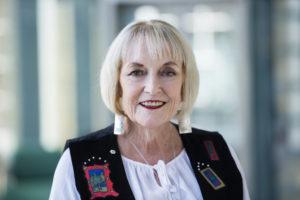
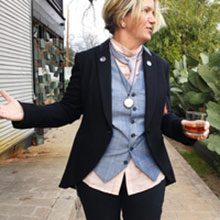
Heather Joseph
Executive Director, SPARC
COPYRIGHT REBECCA DROBIS

Heather Joseph
Executive Director, SPARC

Title: Open Knowledge Sharing in a Chaotic Time

[video] [slides]

About the Speaker

As SPARC’s Executive Director since 2005, Heather has focused the organization’s efforts on sharing knowledge. Under her stewardship, SPARC has become the leading advocacy organization promoting innovative open and equitable global systems of research and education. She leads SPARC’s strategic work, which has resulted in a fundamental shift in public policy towards open knowledge sharing, including the establishment of the landmark White House Memorandum requiring open access to all U.S. federally funded research outputs in 2023.

She has provided guidance and advice to both public and private funders through her service on national boards and committees ranging from the U.S. Department of Commerce Data Advisory Council to the National Institute of Standards Research Data Framework Committee and has worked to incentivize knowledge sharing by spearheading the establishment of the U.S. National Academies of Science, Engineering and Medicine’s Roundtable on Aligning Incentives to Support Open Science.

She is a widely respected expert on national and international open research policies, practices, and implementation strategies; Heather has worked on initiatives and consultations promoting the open sharing of research outputs from the United Nations to the World Bank. Through SPARC’s global network of affiliates in Europe, Asia and Africa, she is an active collaborator on projects that support community-developed and controlled solutions for knowledge sharing.

Prior to joining SPARC, Heather spent 15 years as a publisher in both commercial and not-for-profit journal publishing organizations. She is deeply engaged in the global knowledge-sharing community and serves on the Board of Directors of organizations ranging from the Public Resource to OurResearch. She is a frequent speaker and writer on scholarly communications and higher education issues and open access to research in particular.


Thursday, June 18, Plenary Panel: Connecting Faculty Research in DEIA and Digital Publishing [video]

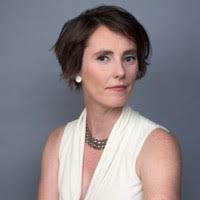
Melanie Walsh
University of Washington

Title: How Data Shapes—and Reveals—Who and What Gets Published

Abstract: This talk will draw on Walsh’s work at the intersection of data, publishing, and library collections. In recent years, researchers have used data to quantify major racial biases in the mainstream publishing industry, showing that U.S. publishing has been historically dominated by white authors. In a similar vein, libraries have begun to adopt data-driven audits to evaluate the diversity of their collections. While these audits can be broadly valuable, they often carry implicit assumptions and sometimes contribute to reductive understandings of diversity. They also raise questions about how diverse library collections can be without interventions in publishing. Drawing on her research into book sales data, Walsh will reflect on how data itself shapes and incentivizes who and what gets published, including not only in mainstream trade publishing but also in academic publishing, pointing to potential areas where library publishing groups might focus advocacy and attention.

About the Speaker

Melanie Walsh is an Assistant Professor in the Information School and an Adjunct Assistant Professor in the English Department at the University of Washington. She is an Executive Council member for the new Center for Advances in Libraries, Archives, and Museums (CALMA). She is a former Postdoctoral Associate in Information Science at Cornell University and received her PhD in English Literature from Washington University in St. Louis.

Her research interests include data science, digital humanities, literature, libraries, and social media. She investigates how data and computational methods shape contemporary culture, and how they can be used to understand culture in turn.

She is co-editor of the Post45 Data Collective, a peer-reviewed venue for literary and cultural data from 1945 to the present. With funding from the National Endowment for the Humanities, she has developed open-source tools for working with bibliographic data, such as BookReconciler, a tool for book data reconciliation and enrichment. She also leads the What’s Seattle Reading? project, which explores contemporary reading trends with unique open data provided by the Seattle Public Library.

Additionally, she is working on a book, When Postwar American Fiction Went Viral: Protest, Profit, and Popular Readers in the 21st Century, which argues that social media is reshaping the past and future of American literature. Lastly, she authored a free, open-source textbook, Introduction to Cultural Analytics & Python, which introduces the programming language Python to people interested in the humanities and social sciences.

Her work has been funded by the Mozilla Foundation, the National Endowment for the Humanities, and Schmidt Sciences.


Sandy Littletree and Carole Palmer
University of Washington

Title: Rethinking Data Stewardship through Indigenous Priorities [slides]

Abstract: As open data and open science shape how research is shared and valued, we need intensive attention to the consequences of our professional data stewardship practices.  For Indigenous communities, data access and control are inextricably tied to histories of extraction, omission, and harm that are at risk of being perpetuated into the future. By centering Indigenous priorities—both those of Indigenous scholars and communities—in libraries and repositories, we can build, and, when necessary, rebuild, more ethical data systems for the long term. Grounding all data stewardship in respect, reciprocity, and relational accountability will produce a more trustworthy data ecosystem that can serve generations to come. This talk explores the challenges and possibilities for meaningful change toward upholding Indigenous priorities as the default in research data stewardship.

About the Speakers

Sandy Littletree

Sandy Littletree is an Assistant Professor in the Information School at the University of Washington. Her research focuses on the emerging field of Indigenous information science, particularly Indigenous librarianship and the intersections of tribal sovereignty, technology, knowledge, and information in Native North America. Littletree’s research is guided by Indigenous ways of knowing, that is, the ways Native people have been creating, transmitting, categorizing, and preserving knowledge since the beginning of time. Relationality is at the core of this approach, informing the structure, core values, and ethics of Indigenous information science. She is currently a co-PI of Data Services for Indigenous Scholarship & Sovereignty and Scaling Community Through Archives: A National Program to Expand Community Archives. She was the PI of Centering Washington Tribal Libraries and Neighboring Washington Tribal Libraries projects.
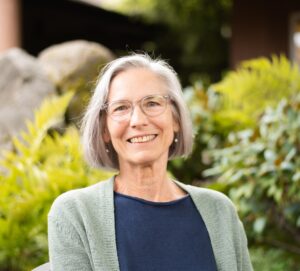
Carole Palmer

Carole Palmer is a Professor in the Information School at the University of Washington. She works in the areas of data curation and digital research collections, with a focus on supporting interdisciplinary inquiry and principled stewardship of research data in libraries and repositories. Her research has been funded by NSF, IMLS, the Mellon Foundation and other sponsors for work that span the sciences, social sciences, and humanities, with projects ranging from discovery potentials in neuroscience, site-based data curation in geobiology, and boundary work in the humanities, to large-scale federation of digital cultural heritage collections. She is currently PI on Data Services for Indigenous Scholarship & Sovereignty and a leader of the LIS Forward initiative. As an educator, Palmer was a pioneer in data curation curriculum and professional workforce development. She served as Director of the Center for Informatics Research in Science & Scholarship at the School of Information Sciences at the University of Illinois from 2007-2014 and as Associate Dean for Research at the Information School at the University of Washington from 2015-2024.
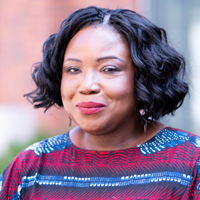


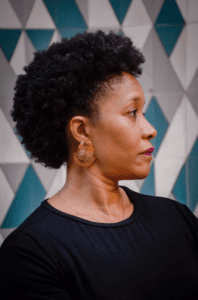
Tracie Hall
HBCU Library Alliance

Title: ‘Saviors’ and Silences: The Potentialities of Library Publishing in Resisting Racialized Censorship [slides]

Abstract: Tracie D. Hall’s presentation interrogates how contemporary censorship movements—often framed by groups positioning themselves as protectors of children, patriotism, or “traditional values”—have produced new silences within academia by targeting scholarship on race, gender, history, and identity. The presentation also offers ideas on how academic libraries can resist these efforts not only through defense of challenged materials, but through proactive teaching and learning programming for faculty and library publishing initiatives that cultivate and disseminate original scholarship reflective of their faculty, students, and communities. Emphasizing open access, community authorship, and the foundational mission of higher learning, Hall looks at how library publishing can expand the scholarly canon, preserve marginalized knowledge systems, and strengthen intellectual freedom in an increasingly restrictive political climate.

About the Speaker

Tracie D. Hall was named Executive Director of the Historically Black Colleges and Universities (HBCU) Library Alliance in January 2026. Prior to assuming this role, she was appointed Distinguished Practitioner in Residence and Professor of Practice at the University of Washington Information School in Seattle, where she continues to teach. Hall’s career reflects distinguished leadership across libraries, arts administration, and cultural policy. Her previous roles include Executive Director of the American Library Association; Deputy Commissioner of Chicago’s Department of Cultural Affairs and Special Events; Director of the Joyce Foundation’s Culture Program; and Assistant Dean of Dominican University’s Graduate School of Library and Information Science.

Her contributions to libraries, the arts, and social advocacy have earned national and international recognition. In 2022, Hall received the National Book Foundation’s Lifetime Achievement Award for her enduring influence and excellence in the literary field. In 2023, TIME Magazine named her to the TIME100 list of the world’s most influential people. That same year, the Franklin D. Roosevelt Institute honored her with its Medal for Freedom of Speech and Free Expression, and the Metropolitan Chicago YWCA awarded her the Sojourner Truth Leadership Award. Illinois Humanities also recognized her with the Beacon Award for her contributions to arts and letters. In 2025, Hall received an Emmy Award nomination as co-producer of the documentary The Audit: Black Women in Leadership Post-George Floyd. That year, she was also awarded an honorary doctorate from the University of London, Royal Holloway College, in recognition of her lifelong advocacy for information access and the freedom to read. Hall currently serves on the boards of regional and national organizations dedicated to expanding access to the arts and education.


Please check back later for further information about keynotes.

2025 Forum Banner

2025 Library Publishing Forum

Keynote Speakers

Jerome Offord, Jr.

DEI Is NOT Dead: Reigniting the Flame for Equity and Inclusion in a Changing World

As organizations navigate cultural shifts, political pressures, and economic uncertainty, one critical truth remains: diversity, equity, and inclusion (DEI) are not passing trends; they are essential pillars for sustainable leadership, innovation, and community impact. Amid debates and skepticism surrounding the future of DEI initiatives, this plenary session brings together thought leaders, change agents, and innovators to reaffirm and reimagine the role of DEI in today’s evolving landscape. The session will challenge the narrative that DEI has lost relevance, offering bold insights and data-driven strategies proving its continued importance across sectors. Through compelling storytelling, real-world examples, and interactive dialogue, this session will inspire attendees to move beyond performative practices and reignite authentic, purpose-driven engagement. This is not just a conversation; it’s a call to action. DEI is not dead. It’s being reborn. Be part of the movement.

Key Takeaways:

  • Understand the evolving landscape of DEI in a complex social and political climate.
  • Explore innovative and sustainable DEI strategies for long-term success.
  • Gain tools to respond to DEI fatigue and pushback with clarity, courage, and credibility.

About the Speaker

Jerome Offord, Jr. is the Associate University Librarian (AUL) and Chief Diversity Officer for Harvard Library. Expanding upon the library’s strong record of diversity initiatives, the AUL and Chief Diversity Officer collaborates extensively to develop strategies for organizational change through the library’s workforce, services, collections, and spaces. Before joining Harvard, Jerome served as the Vice President for Business and Administration at DeEtta Jones and Associates. Jerome has held senior cabinet positions at Lincoln University of Missouri, a Historically Black College and University (HBCU), over a span of eight years. Initially hired as Dean of Library Services and Archives, he was soon asked to serve as Interim Provost and Interim Chief Information Officer. He was subsequently appointed Chief of Staff to the President, and then Dean of Administration and Student Affairs. Jerome’s other professional experiences include serving as Diversity Officer and Corporate Inclusion Manager at OCLC Online Computer Library Center; Director of Diversity Initiatives at the Association of Research Libraries; Director of Finance and Development at Us Helping Us, People Into Living; and in student affairs roles at Colorado State University, George Washington University, and American University. Jerome’s educational credentials include a Ph.D. in Library and Information Science, with an emphasis in Managerial Leadership, from Simmons University in Boston; master’s degrees in Library and Information Science from the Catholic University of America and in Student Affairs in Higher Education from Colorado State University; an Executive MBA from Washington University in St. Louis; and a Bachelor of Science in Agriculture from Lincoln University.


Tim Ribaric and Cecile Farnum

Harvesting Library Labour in an AI World: The Grim Reaping of Library Work(ers) and What We Can Do About It

“You must give to get, You must sow the seed, before you can reap the harvest.” ~ Scott Reed

The growth of GenAI, LLMs, and chatbots threaten many established ways of performing academic work, and is already resulting in labour concerns for library workers.  This keynote considers the impact of AI on scholarly publishing work in academic libraries.

All aspects of the  scholarly publishing life cycle (Submit, Review, Decide, Edit and Preserve) have the potential for a deep impact from AI, and are therefore relevant for the library community to consider. Scholarly publishing work is also deeply intertwined with the open access movement, where processes and outputs are often done ‘out in the open’, and are therefore ripe for harvesting by A.I. for reuse. What are the potential consequences of this brand of cognitive offloading in the scholarly publishing process? And what are the labour implications for library workers, authors and publishers, when A.I. tools begin to do this work?

In this keynote, librarians Tim Ribaric and Cecile Farnum will consider the role libraries may play in both augmenting and striving against AI, using a critical lens that is skeptical of the difference between what the promise of AI is, compared to the reality of what it will bring.

About the Speakers

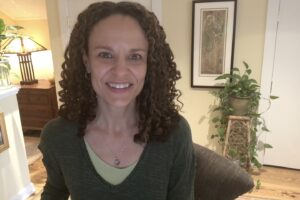
Tim Ribaric is the Scholarly Publishing and Platforms Librarian at Brock University. He is a Librarian IV, and a PhD Candidate. He has published on technology instruction in libraries, Marxism, and is currently teaching 3 Library Juice Academy classes. He has served in various roles on his union executive and was the chair of the Canadian Association of University Teachers Librarians’ and Archivists’ committee.
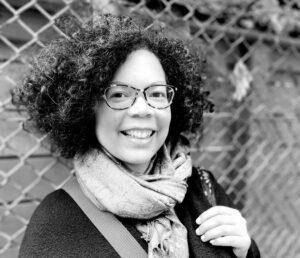
Cecile Farnum  (MA, MISt) is a liaison librarian at Toronto Metropolitan University Libraries. In this role, she supports specific academic programs, providing instruction, reference and research support to students and faculty.

Cecile actively participates in labour spaces,  having participated in several rounds of collective bargaining through her faculty association, as well as work on other  faculty association committees. Cecile also recently served on the CAUT Librarians’ and Archivists’ Committee, and the steering committee to organize OCUFA’s 2024 Bargaining Stronger Together Collective Bargaining Conference.


2024 Library Publishing Forum

Keynote Speaker

Katherine Skinner

Katherine Skinner is an open knowledge researcher-activist with deep commitments to community building, organizational resilience, and systems thinking.  She currently serves as Research Lead at Invest in Open Infrastructure, a nonprofit organization that works to increase the investment in and adoption of open infrastructure to further equitable access to and participation in research. Prior to this post, her passion for facilitating, empowering, and cultivating communities led her to help found the Educopia Institute in 2006, where she served as Executive Director for 16 years, There, she provided scaffolding, training, and systems to support the founding and growth of such collaborative groups as Library Publishing Coalition, MetaArchive Cooperative, BitCurator Consortium, C4DISC, Software Preservation Network, and Maintainers. She also co-authored Community Cultivation: A Field Guide (2018) to provide an open, practical guide to this type of work.

She has co-edited three books and has authored and co-authored numerous reports and articles. She has served as Principal Investigator for 24 research projects funded by foundations and federal grants and awards on topics like education (Nexus LAB, Bitcurator.edu), digital curation (Chronicles in Newspaper Preservation, OSSArcFlow), and scholarly communication (Library Publishing Workflows, Mapping the Scholarly Communication Infrastructure). She lives with her family (partner, two teens, two felines, and a canine) in Greensboro, NC, in the US.

Keynote Title: Moments, movements, and momentum: What comes next?

Description: A decade ago, Educopia, together with 60 universities, seed-funded and hosted the inaugural Library Publishing Forum. In that formation moment, library publishers forged a collective identity and shared crucial information with each other about how their publishing ideas and experiments were becoming institutionalized as new scholarly publishing practices. Over the last decade, we’ve seen library publishing grow into a full-fledged movement that shares close ties to the open access, open source, and open infrastructure movements. This talk will take us back to revisit the vision and aims declared in the early years and look at the ways these have manifested since that time. Skinner will sketch out the story of how that initial moment has spurred the larger movement of “library publishing” and look at its connections to other social movements both past and present. Skinner will also challenge us to think together about our current momentum and plans and will ask us what stories we want to tell at the celebration in 2034 of our second decade together.


2023 Forum Banner

2023 Library Publishing Forum

Keynote Speakers

Dorothea Salo

Dorothea Salo is Distinguished Teaching Faculty III in the University of Wisconsin at Madison’s Information School. She has written and presented internationally on privacy, copyright, scholarly publishing, and data curation. As co-investigator for the Data Doubles research project, she helped investigate undergraduates’ perceptions of privacy around campus Big Data practices. Salo holds an MA in Library and Information Studies and another in Spanish from UW-Madison.

Keynote Title: She Can’t Say That, Can She?

Description: Library publishing is becoming an integral part of libraries’ public face in academia. Given widespread attention to ethics failures in academic publishing more broadly, it behooves us to put our own publishing-ethics house in order.  Library learning analytics provides multiple distressing examples of LIS publications with fairly glaring ethical flaws. How did matters devolve this far? Why aren’t we talking more about it? Are we even allowed to?


Deborah Poff

Deborah Poff is a retired Professor of Philosophy and Senior Academic Administrator. She holds four degrees from three universities in Canada (University of Guelph, Queen’s University, Carleton University). Her PhD was in Philosophy of Science and her MA was in Philosophy of Mind. Her two undergraduate degrees were a BA Honours in Psychology and a BA Honours in Philosophy. During Deborah’s career, she was variously the Director of a Research Institute; a Dean of Arts and Science; a Vice-President Academic and Provost and a President and Vice-Chancellor at various Canadian Universities.

During her career, she has also been an active researcher, teacher and editor and is the founding Editor in Chief of the Journal of Academic Ethics which she edited for over 20 years. She was the Editor of the Journal of Business Ethics for over 30 years. She is currently the Editor of the Journal of Scholarly Publishing, published by University of Toronto Press. Throughout her career, she has been the editor of five scholarly journals, a book series and has published numerous other monographs and anthologies. Her research and publication areas are: Applied Ethics, including Business and Professional Ethics; Research Ethics, Publication Ethics, Leadership Ethics and Feminist Studies. In 1995, she was awarded a lifetime honorary membership by the Canadian Research Institute for the Advancement of Women in the category of “Outstanding Contribution to Feminist Scholarship”. Her most recent publication is an anthology entitled “Corporate Social Responsibility and University Governance”. Her monograph in progress is on the history of discrimination from Aristotle to Now. She has recently completed the Encyclopedia of Business and Professional Ethics.

Among her many service accomplishments, she served nine years on the Committee on Publication Ethics Council and Board of Trustees, including in the role of Chair and is a recognized leader in the field of publication ethics. She also served as the President of the National Council for Human Participant Protection in Canada. She has served as a leader and participant member of many organizations and committees, including the British Columbia Degree Granting Committee for the government of British Columbia. She has also been the lead of many learned societies, including as the President of the Women’s Studies Association of Canada.

In 2016, Deborah Poff was awarded the Order of Canada through the Office of the Governor General of Canada.

Keynote Title: The State of Play in Current Major Forms of Deception in Publishing: Predatory Publishing, Paper Mills and ChatGPT


2022 Forum Banner

LP Forum 2022

Keynote Speakers

We’re pleased to share a list of the keynote speakers for the virtual Forum event and for the in-person Forum in Pittsburgh. More information about the speakers and their topics will be posted when available. List is subject to change.

Keynotes for the virtual Forum event (May 18–19)

Jane Anderson, Associate Professor at New York University

Dr. Jane Anderson, NYU, co-director, Local Contexts

Jane Anderson is an Associate Professor at New York University in Lenapehoking (New York) and Global Fellow in the Engelberg Center for Innovation Law and Policy in the Law School at NYU. Jane has a Ph.D. in Law and works on intellectual and cultural property law, Indigenous rights and the protection of Indigenous/traditional knowledge and cultural heritage. For the last 20 years Jane has been working for and with Indigenous communities to find, access, control, and regain authority and ownership of Indigenous cultural and intellectual property collections and data within universities, libraries, museums and archives. Jane is co-founder of Local Contexts which delivers the Traditional Knowledge and Biocultural Labels and Notices. She is also the co-founder of the Equity for Indigneous Research and Innovation Co-ordinating Hub (ENRICH) which is a collaboration between NYU and the University of Waikato, NZ.


Janne Pölönen

Janne Pölönen, Secretary General, Publication Forum, Federation of Finnish Learned Societies

Janne Pölönen (ORCID: https://orcid.org/0000-0003-1649-0879) works as the Secretary General of Publication Forum at the Federation of Finnish Learned Societies. Since 2010, he has developed the national community-curated quality classification of peer-reviewed journals and book publishers, which supports the performance-based research funding system of Finnish universities. His recent publications are in the fields of research evaluation, bibliometrics, scholarly communication and open science. He is also involved in policy work, including the Helsinki Initiative on Multilingualism in Scholarly Communication, the National recommendation for the responsible evaluation of a researcher in Finland, and EOSC Co-creation project on Making FAIReR Assessments Possible.


Keynotes for the in-person Forum in Pittsburgh (May 25–26)

Christen Smith, Founder of Cite Black WomenChristen Smith, Founder of Cite Black Women and Associate Professor of African and African Diaspora Studies and Anthropology, University of Texas at Austin

Christen A. Smith is a Black feminist anthropologist and the creator of Cite Black Women.—a campaign that brings awareness to the race and gender politics of citation, and the erasure of Black women’s intellectual contributions in global society. In 2018 Cite Black Women was listed as one of the Top 10 Issues by Essence Magazine; featured by The Times Higher Education of London. In 2018 Cite Black Women also launched its podcast, which was listed as one of the Top Podcasts by Black Women for Black Women by The Grio in 2019.

In addition to her work on citation and Black women’s intellectual contributions to the Americas, Christen researches the immediate and long-term impact of police violence on Black communities in the Americas–particularly on Black families and Black women. She is the author of Afro-Paradise: Blackness, Violence and Performance in Brazil , which won Honorable Mention for the Errol Hill Award from the American Society for Theatre Research (ASTR) in 2017. Her research and writing has been featured in a wide range of public media outlets including Democracy Now!, Al-Jazeera, BBC’s World Have Your Say, Pacifica Radio, The New York Times, The Nation, PBS NewsHour, Maclean’s (Canada), The Feminist Wire, and in the Brazilian magazine Caros Amigos.

Christen is an associate professor of anthropology and African and African diaspora studies, and director of the Center for Women and Gender Studies at the University of Texas at Austin.


Closing Panel

Marcia Rapchak, University of Pittsburgh Marcia Rapchak, University of Pittsburgh
Marcia Rapchak is a Teaching Assistant Professor in the School of Computing and Information at the University of Pittsburgh, where she teaching in the MLIS program. Her research and teaching interests include information literacy, online learning, and critical librarianship. Previously, she was Head of Teaching and Learning in Gumberg Library at Duquesne University. She received her MA in English from The Ohio State University, her MSLS from the University of Kentucky, and her doctorate in Instructional Technology from Duquesne University. Marcia is on the Council of Representatives for the union at Pitt and was involved in unionizing efforts since 2019.


Chloe Mills, Robert Morris UniversityChloe Mills, Robert Morris University

Chloe has recently stepped up to be University Librarian at Robert Morris University after 14 years of working there as a librarian. Prior to moving into administration she was a union member, union liaison, and then union treasurer in her tenure as a faculty librarian. Her research interests are unionization and collective bargaining in higher education, with a focus on the concerns of academic librarians, business librarianship, and library management.
Chloe has her library science MLIS from University of Pittsburgh and an MA in Classical Studies from the University of Illinois. She received a BA in Linguistics and Philosophy from Reed College in Portland, OR. She has worked formerly as a maid, a driver, graduate assistant, video store manager, high school Latin teacher, and phone interviewer. She has two children, Cassius (11) and Anne Elizabeth (7) Cothran Morrissey, whom she manages to raise and love while fulfilling her expanding work duties, maintaining her many meaningful friendships, reading eclectically, and training in Brazilian Jiu-Jitsu.


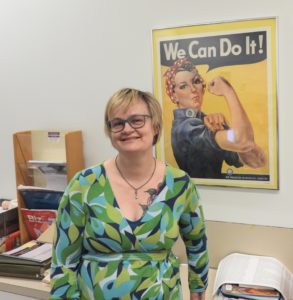
Rachel Masilamani, Carnegie Library of PittsburghRachel Masilamani, Carnegie Library of Pittsburgh
Rachel Masilamani has provided reference and instruction services in academic, public, and special libraries for over 25 years. She believes that libraries are powerful places for breaking down barriers to information access, building communities, and helping everyone access the resources they need to achieve success on their own terms. From 2011-2021,  Rachel assisted entrepreneurs seeking to start their own businesses at the Carnegie Library of Pittsburgh. She was also a founding organizer of the United Library Workers (ULW) union, and a bargaining committee representative for first contract negotiations.


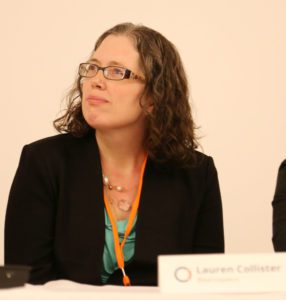
Lauren B. Collister, University of PittsburghLauren B. Collister, University of Pittsburgh (moderator)

Lauren B. Collister, Ph.D., is the Director of the Office of Scholarly Communication and Publishing at the University Library System, University of Pittsburgh. She oversees the library publishing program as well as the repository, copyright and intellectual property, and open scholarship initiatives for the library. Building on her background in linguistics, she currently researches language and advocacy for open scholarship, and is co-editor of the 2022 Open Handbook of Linguistic Data Management published open access from MIT Press. Read more about Lauren’s work at http://www.laurenbcollister.com


2021 Forum Banner

LPForum 2021

The Library Publishing Forum is an annual conference bringing together representatives from libraries engaged in (or considering) publishing initiatives to define and address major questions and challenges; to identify and document collaborative opportunities; and to strengthen and promote this community of practice.

The 2021 Library Publishing Forum will be a virtual conference. We are excited to be able to share Forum programming with the library publishing community as travel and large gatherings are impossible.

#LPforum21
May 1014 | 12:00 PM to 5 PM Eastern Time


LPForum 2020

The Library Publishing Forum is an annual conference bringing together representatives from libraries engaged in (or considering) publishing initiatives to define and address major questions and challenges; to identify and document collaborative opportunities; and to strengthen and promote this community of practice.

For the first time in 2020, we will hold the Forum virtually. We are excited to be able to share Forum programming with the library publishing community at a time when travel and large gatherings are impossible, while extending our ongoing thanks to the University of Massachusetts Medical School for their work as the host of our planned in-person conference.

#LPForum20
May 4-8 | noon to 5 PM Eastern Time


LPForum 2019 Vancouver

LPForum 2019

The Library Publishing Forum is an annual conference bringing together representatives from libraries engaged in (or considering) publishing initiatives to define and address major questions and challenges; to identify and document collaborative opportunities; and to strengthen and promote this community of practice. The Forum includes representatives from a broad, international spectrum of academic library backgrounds, as well as groups that collaborate with libraries to publish scholarly works, including publishing vendors, university presses, and scholars. The Forum is sponsored by the Library Publishing Coalition, but you do not need to be a member of the LPC to attend.

#LPForum19

Keynote: Dr. Arianna Becerril-García

Photo of Dr. Arianna Becerril-Garcia

Dr. Becerril-Garcia has a Ph.D. in Computer Sciences from Tecnológico de Monterrey, Mexico, a Master in Computer Sciences from the same institution, and Computing Engineer from the Autonomous University of the State of Mexico (UAEM). She is a member of the International Advisory Board of the Directory of Open Access Journals (DOAJ) and co-founder of the Mexican Network of Institutional Repositories (REMERI). She founded AmeliCA, a community-driven initiative for Open Knowledge in Latin America and the Global South. She has published numerous papers in research journals as well as three books. She has participated in more than 40 national and international conferences. Her research topics are open access, interoperability technologies, visibility of science, semantic web and linked data. Her recent works and international conferences are “A Semantic Model for Selective Knowledge Discovery over OAI-PMH Structured Resources”, Information (Switzerland, 2018); “The end of a centralized Open Access project and the beginning of a community-based sustainable infrastructure for Latin America: Redalyc.org after fifteen years.”, ELPUB (Toronto, 2018), “The Open Access Model in Latin America”, COASP (Washington, DC, 2016); “Redalyc – ORCID integration: Inserting Latin-American authors in the global scientific conversation”, ORCID (Washington, DC, 2016).


LPForum 2018

The Library Publishing Forum is an annual conference bringing together representatives from libraries engaged in (or considering) publishing initiatives to define and address major questions and challenges; to identify and document collaborative opportunities; and to strengthen and promote this community of practice. The Forum includes representatives from a broad, international spectrum of academic library backgrounds, as well as groups that collaborate with libraries to publish scholarly works, including publishing vendors, university presses, and scholars. The Forum is sponsored by the Library Publishing Coalition, but you do not need to be a member of the LPC to attend.

#LPForum18

Keynote: Catherine Kudlick

Catherine Kudlick photograph
After two decades at the University of California, Davis, Catherine Kudlick became Professor of History and Director of the Paul K. Longmore Institute on Disability at San Francisco State University in 2012. She has published a number of books and articles in disability history, including Reflections: the Life and Writings of a Young Blind Woman in Postrevolutionary France and “Disability History: Why We Need Another Other” in the American Historical Review. She oversaw completion of Paul Longmore’s posthumously published book, Telethons: Spectacle, Disability, and the Business of Charity. She is co-editing The Oxford Handbook of Disability History with Michael Rembis and Kim Nielsen. As director of the Longmore Institute, she directed the public history exhibit “Patient No More: People with Disabilities Securing Civil Rights” and co-hosts Superfest International Disability Film Festival. She has been active in electronic accessibility initiatives, first at UC Davis and more recently in public advocacy.


LPForum 2017

Keynote Speakers

Eileen Joy

Eileen is a specialist in Old English literary studies and cultural studies, as well as a para-academic rogue, and a publisher, with interests in poetry and poetics, historiography, ethics, and embodiments, queer studies, speculative realism, object-oriented ontology, the ecological, the post/human, and scholarly communications. She is the Lead Ingenitor of the BABEL Working Group, Editor of postmedieval: a journal of medieval cultural studies,  Founding Director of the open-access academic press punctum books: spontaneous acts of scholarly combustion, and Associate Director of punctum records. She lives in Santa Barbara, California where she also works with faculty, librarians, and students at UC-Santa Barbara on various open-access and maker lab initiatives.


Safiya Noble

Safiya is an assistant professor in the Department of Information Studies in the Graduate School of Education and Information Studies at UCLA. She also holds appointments in the Departments of African American Studies, Gender Studies, and Education. Her research on the design and use of applications on the Internet is at the intersection of race, gender, culture, and technology. Her forthcoming monograph interrogates the social justice implications of racist and sexist algorithmic bias (forthcoming, NYU Press). She currently serves as an Associate Editor for the Journal of Critical Library and Information Studies, and is the co-editor of two books: The Intersectional Internet: Race, Sex, Culture and Class Online(Peter Lang, Digital Formations, 2016), and Emotions, Technology & Design (Elsevier, 2015). Safiya holds a Ph.D. and M.S. in library & information science from the University of Illinois at Urbana-Champaign, and a B.A. in sociology from California State University, Fresno with an emphasis on African American/ethnic Studies.