Posts by A.J. Boston

Fellows Journal. Logo for the Library Publishing Coalition. Background image features bokeh lights in blues and greens.

Thinking Politically About Scholarly Infrastructure

By

The Fellows Journal is a forum for the current Library Publishing Coalition fellows to share their experiences and raise topics for discussion within the community. Learn more about the Fellowship Program


Maybe it’s not all that surprising that I’ve come to think about ScholComm in terms similar to US politics. Right now, as I draft this blog post, we are just a handful of days away from the 2020 election and in January 2020, as the next (and hopefully different) president will be inaugurated, I will be compiling my tenure application. It’s been like this from the start. I was hired in February 2016, when the Republican Party presidential primaries were beginning, which was the same month I joined Twitter to better follow both politics and librarianship. Sometimes we get what we ask for.

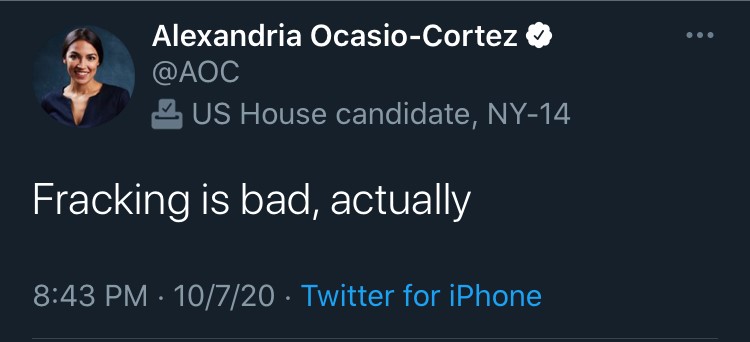
Twitter has been invaluable for keeping up with the latest ScholComm developments through conference live-tweets, article and policy announcements, and candid conversation between relevant figures in the field. I remember reading the first Plan S announcement tweet from cOAlition-S in 2018, and in fact the Library Publishing Coalition blipped onto my radar from #LPForum19 tweets. Using Twitter has also made me excruciatingly aware of the shape of our political fights, pushed me further leftward, and as I mentioned, caused me to think about ScholComm and politics through a similar framing. Here’s an example of how that can play out.

Tweet from Alexandria Ocasio-Cortez, US Representative, NY-14. "Fracking is bad, actually."
https://twitter.com/AOC/status/1314018453192409102


(more…)


Banner image for 2020 Virtual Library Publishing Forum

LPForum20: Fellows Forum

By

Editor’s note: When we changed the 2020 Library Publishing Forum to a virtual conference format, we gave presenters the option of converting their presentations into blog posts. This is a guest post in that series. In this case, the post is also an entry in the ongoing Fellows Journal series


By Talea Anderson (Washington State University) and AJ Boston (Murray State University), 2019-21 Library Publishing Coalition Fellows

AJ Boston, Apr. 24: Hi Talea. Thanks for agreeing to transition our Fellows Forum panel for the 2020 Forum into this collaborative blog post. The way I imagine this going is that we write back and forth in a shared Google Doc, prompt each other about the topics we broadly recognize the other had an interest in speaking about at the Forum, and then spiral out organically from there. A caveat to that “organically” being that we can edit and condense as we go along. (I’ll refrain from editing this initial block of text, for the sake of the reader.) Before I hop into some of the questions I have about your experience as an LPC Fellow, is there anything you want to add?

Talea Anderson, Apr. 27: Thanks, AJ—this sounds great. You know, the first thing that comes to mind is how you talked early on in the fellowship about your experience with libraries and library publishing as a parent. I think, in light of COVID-19, that type of reflection might be of particular interest to others in this community. It’s so challenging right now juggling work, kids…mental health….

AJ, Apr. 27-28: Yes! I saw someone on Twitter say they wanted to give 100% to parenting or working, rather than half-assing both. I feel like that. Our five-person household has been homebound almost every day for the past six weeks. Within that span of time, I was originally scheduled to attend the Library Tech Conference, present at the in-person Library Publishing Forum, and coordinate my campus student scholars week. 

The last thing I did in-person was coordinate a statewide student poster event at our capitol in March. Virus warning signs were beginning to really register, but public response hadn’t caught up yet. The SXSW cancellation announcement came just the day after we held our event, and that was the first Big Announcement that I can recall. LPC announced the cancellation of the in-person Forum on the following Monday. I felt guilty not canceling our poster event, but I was still bouncing back from a tremendous family loss a couple weeks earlier. In hindsight, I see why my judgment was cloudy.

The campus scholars week event I coordinate was scheduled for April, and by that time students were attending class remotely. I was working from home by then too. In light of the burden that students and teachers were facing with the transition to remote learning, we held a virtual version for those students who genuinely needed the opportunity and we postponed work on our companion student journal. A fraction of the students who would normally have participated did so; I respect each student who opted out. I wasn’t teaching this semester, so I can only imagine what this abrupt shift has been like for them. My closest glimpse to the post-apocalyptic Zoomiverse is my service on the LPC Program Committee. 

(more…)


Fellows Journal. Logo for the Library Publishing Coalition. Background image features bokeh lights in blues and greens.

Introducing A.J. Boston, 2019-21 LPC Fellow: Contingent upon serendipity

By

The Fellows Journal is a forum for the current Library Publishing Coalition fellows to share their experiences and raise topics for discussion within the community. Learn more about the Fellowship Program

(Image credit: See note below)

It is an honor to be named in the second cohort of Library Publishing Coalition Fellows Program, especially after seeing the example of past Fellows, Charlotte Roh and Reggie Raju. I look forward to becoming better acquainted with my fellow Fellow Talea Anderson and her work in web accessibility.

At Murray State University, I coordinate conferences annually and help publish journals. During my LPC Fellowship, I will serve on the Forum Program Committee. Conference planning and journal management have more similarities than one might imagine!

My current research areas include open peer-review, open citation data, research assessment reform, and AI/machine learning in research. Open infrastructure and the Latin American publishing model are heavily on my mind as well. I’ve previously written about novel methods of introducing students to scholarly communication concepts.

I thank this community and its leadership for providing structure, support, and most of all, this chance to connect.


Image Credit: Suzy Hazelwood, 2018.